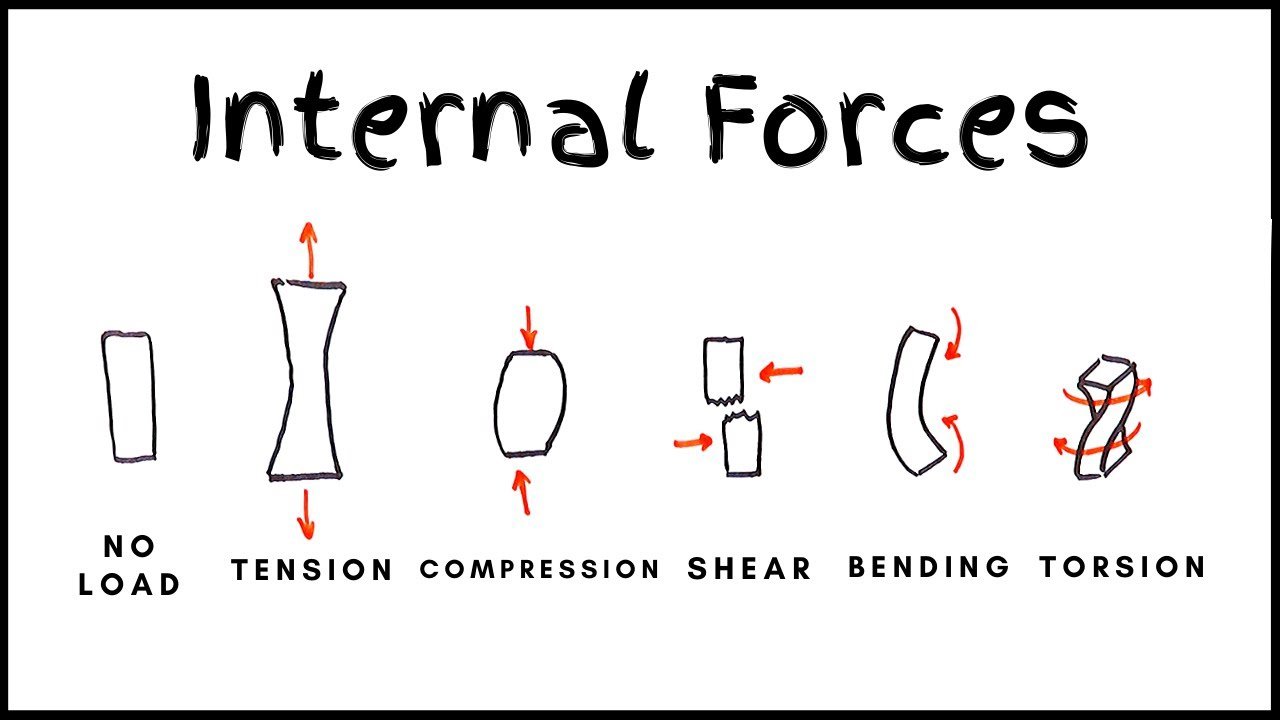
An internal force is a fundamental concept in the study of physics and engineering. Defined as a force that acts within an object or structure, internal forces play a crucial role in determining its stability and behavior. When analyzing the forces at play in a system, understanding what internal forces are and how they interact is vital for predicting and explaining the object’s response to external forces. By delving into the nature of internal forces, we can unravel a deeper understanding of the mechanics governing our physical world.

Understanding Internal Forces in Simple Terms
Welcome, young scientists, to a fantastic journey into the world of forces! Today, we are going to delve deeper into the concept of internal forces – mysterious and powerful energies that exist within objects. Let’s unlock the secrets of what internal forces are and how they shape the world around us!
What Exactly Are Internal Forces?
Before we dive into the nitty-gritty details, let’s start with the basics. Internal forces are forces that act within an object rather than from the outside. Imagine you have a toy car. When you push the car forward, the wheels turn, and the car moves. The force you apply to the toy car is an external force. On the other hand, the internal forces within the car are what keeps its parts together – like the wheels on the axle, or the body of the car intact.
Types of Internal Forces
Internal forces come in different forms, each with its own unique characteristics. Here are a few common types of internal forces you may encounter:
1. Tension Forces
Imagine you have a rubber band. When you stretch the rubber band, it pulls back against your fingers. This pulling force is called tension. Tension forces are internal forces that occur when an object is being stretched.
2. Compression Forces
Contrary to tension forces, compression forces come into play when an object is being squeezed or pushed together. Think of compressing a spring – you are applying a compression force to it.
3. Shear Forces
Shear forces happen when parts of an object slide against each other in opposite directions. Imagine cutting a piece of paper with scissors. The force applied by the scissors is a shear force.
Why Are Internal Forces Important?
Internal forces are crucial for maintaining the structural integrity of objects. They help keep things together, ensuring that buildings stand tall, bridges support our weight, and even the chair you’re sitting on stays sturdy. Without internal forces, everything would fall apart!
By understanding internal forces, engineers and architects can design stronger and more reliable structures that can withstand various external forces like wind, earthquakes, or even the weight of people.
Real-World Examples of Internal Forces
Let’s take a look at some everyday examples of internal forces in action:
1. Bending a Straw
When you bend a straw, you are applying internal forces that cause the plastic to deform. The straw remains intact because of the internal forces that hold its particles together.
2. Pushing a Door
When you push a door open, the internal forces within the door handle and hinges distribute the force throughout the door, allowing it to swing open without breaking.
3. Walking on a Bridge
As you walk across a bridge, the internal forces within the structure support your weight and ensure that the bridge remains stable and safe to use.
Internal forces may seem invisible, but they play a significant role in how the world around us functions. By understanding internal forces, we can appreciate the complexities of physics and engineering that make our everyday lives possible. So, next time you see a building or a bridge, remember the incredible internal forces that hold it all together!
I hope this journey into the world of internal forces has been enlightening for you. Keep exploring, asking questions, and never stop wondering about the amazing forces that shape our world!
Forces | What are internal and external forces? | Internal & External Forces | Physics | Science
Frequently Asked Questions
What are internal forces and why are they important in physics?
Internal forces are forces that act within an object or a system. These forces are crucial in physics as they are responsible for maintaining the object’s shape, structure, and overall equilibrium. Understanding internal forces helps in analyzing the behavior of materials under various conditions.
How do internal forces differ from external forces?
Internal forces arise from interactions between components within an object or a system, while external forces come from sources outside the object or system. Internal forces do not change the object’s overall motion but are essential for maintaining its integrity and stability.
Can internal forces cause an object to move?
Internal forces alone cannot cause an object to move as they only act within the object to maintain its structure. However, internal forces may contribute to the overall net force on an object when combined with external forces, leading to motion or changes in motion based on the resulting force.
Why is it important to consider internal forces in engineering and structural design?
In engineering and structural design, internal forces play a vital role in determining the strength, stability, and safety of structures. By analyzing internal forces, engineers can ensure that materials and components can withstand various loads and stresses, leading to reliable and durable designs.
Final Thoughts
In essence, an internal force is a force that acts within a body or structure, rather than coming from an external source. Understanding internal forces is crucial in engineering and physics, as they play a significant role in analyzing the stability and behavior of structures. By recognizing and accounting for internal forces, engineers can design safer and more efficient structures. Emphasizing the distinction between internal and external forces is essential for accurately predicting the effects of various loads and stresses on a system.